Finding the right old age home in Noida for a parent or elderly relative is one of the most emotionally difficult decisions a family makes — and one of the most confusing. Search results are crowded with homes all claiming to be “the best,” pricing varies from ₹1,000 to over ₹1 lakh a month, and almost nobody explains what actually separates a genuinely good facility from a poorly run one.
This guide fills that gap. Beyond just listing names, it covers the legal framework governing old age homes in India, a locality-by-locality breakdown of Noida, a real cost comparison, the exact questions to ask during a facility visit, and how to spot red flags before you sign anything.
What Makes a Good Old Age Home in Noida?
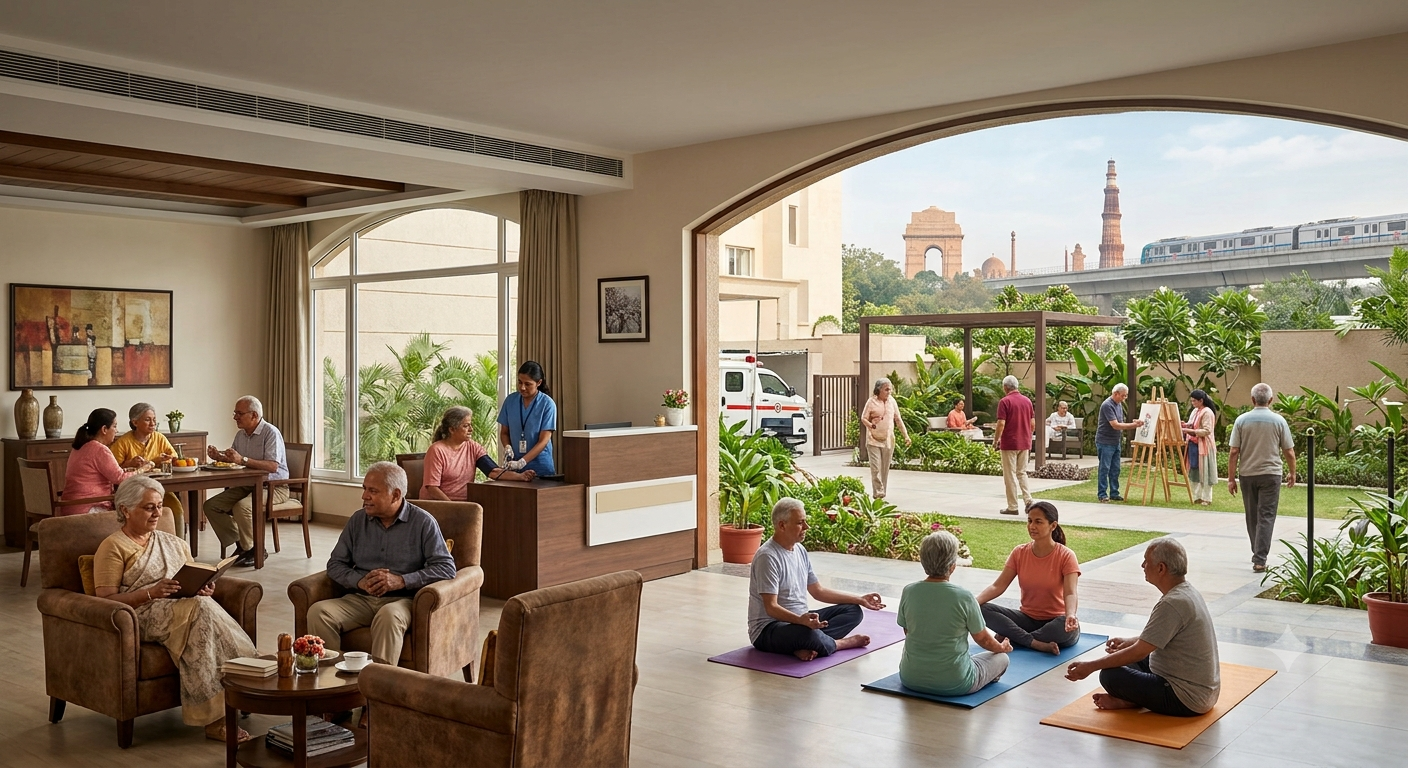
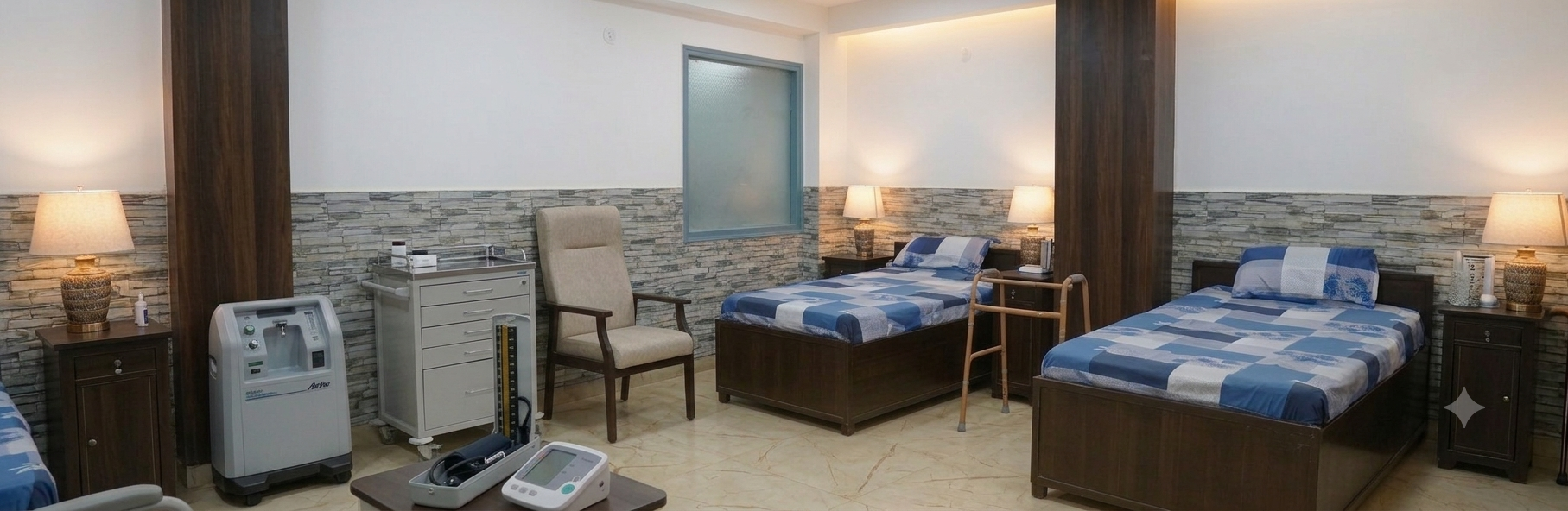
A trustworthy senior citizen care home in Noida should offer 24/7 trained nursing staff, a doctor on call or on-site, hygienic and fall-proof infrastructure, transparent pricing with no hidden charges, registration under Section 19 of the Maintenance and Welfare of Parents and Senior Citizens Act, 2007, and verifiable reviews or a facility you can visit in person before committing. Monthly costs typically range from ₹15,000 for basic shared accommodation to ₹1,00,000+ for luxury private suites with dedicated medical staff.
Types of Old Age Homes in Noida
Most articles use “old age home,” “assisted living,” “nursing home,” and “senior care home” interchangeably. They are not the same, and picking the wrong category is the single most common mistake families make.
| Type | Best For | Medical Support | Typical Cost/Month |
|---|---|---|---|
| Charitable/Free Old Age Homes | Indigent seniors with no family support | Basic, volunteer-run | Free – ₹5,000 |
| Basic Old Age Homes | Independent seniors needing shelter + meals | Minimal, visiting doctor | ₹8,000 – ₹20,000 |
| Senior Citizen Care Homes | Seniors needing daily assistance | 24/7 nursing, doctor on call | ₹20,000 – ₹50,000 |
| Assisted Living Facilities | Seniors needing help with daily activities but not bedridden | Trained caregivers, physiotherapy | ₹30,000 – ₹70,000 |
| Luxury Old Age Homes | Families wanting resort-style, private-suite living | 24/7 in-house medical team, specialist tie-ups | ₹50,000 – ₹1,50,000+ |
| Nursing/Rehab Care Homes | Bedridden, post-surgery, or dementia/Alzheimer’s patients | Full-time clinical staff, equipment | ₹40,000 – ₹1,00,000+ |
If your parent is fully independent and just wants companionship, a basic home works fine. If they have a chronic condition, dementia, or are bedridden, you need a nursing-grade facility — not a general old age home, regardless of how “premium” it markets itself.
Best Areas in Noida to Look for a Senior Citizen Care Home
Location matters more than most listicles admit — proximity to hospitals and to family visiting from Delhi/NCR affects both safety and how often relatives actually visit.
- Sector 62 / 63 – Close to major hospitals (Fortis, Kailash), well-connected by metro, popular for mid-range and luxury facilities.
- Sector 50 / 51 – Quieter residential pockets, good for homes prioritising a calm environment.
- Greater Noida (Alpha, Beta, Gamma sectors) – More space and greenery, generally lower real estate cost translates to more affordable pricing.
- Noida Extension – Emerging cluster of newer assisted living facilities with modern infrastructure.
- Sector 44 / 45 (near Noida-Greater Noida Expressway) – Good expressway connectivity for NRI families flying in via Delhi.
When shortlisting, check the exact distance to the nearest multi-specialty hospital — this is a detail almost no competitor page states clearly, and it matters in a medical emergency.
Real Cost of Old Age Homes in Noida (2026)
Pricing pages online are often vague. Here’s a realistic breakdown based on facility type:
- Charitable homes: Free to ₹5,000/month — usually trust-run, limited capacity, often reserved for economically weaker seniors.
- Basic shared-room homes: ₹15,000–₹25,000/month — includes meals, basic nursing, shared rooms.
- Mid-range private-room care homes: ₹25,000–₹50,000/month — private/semi-private room, daily medical checks, recreational activities.
- Luxury old age homes: ₹50,000–₹1,50,000/month — private suites, gourmet meals, dedicated caregivers, concierge-style services, in-house physiotherapy and specialist visits.
- Additional costs to ask about upfront: security deposit (often ₹50,000–₹2,00,000, refundable), medicine and diagnostic charges, ambulance/emergency transport fees, and physiotherapy or specialist consultation charges — these are frequently excluded from the advertised monthly rate.
Always request an itemised cost sheet in writing before admission. Verbal quotes that later balloon with “extra” charges are one of the most common complaints families report.
The Legal Side Nobody Talks About
This is the biggest content gap in most old age home articles — and one of the most important things a family should know before choosing a facility.
The Maintenance and Welfare of Parents and Senior Citizens Act, 2007 is the central law governing elderly care in India. Under Section 19 of this Act, state governments are required to establish and maintain old age homes in each district for indigent senior citizens, with a minimum capacity of 150 residents per home. This is also the section under which private and NGO-run care homes register to legally operate.
A few practical takeaways for families:
- Ask if the home is registered under Section 19 or with the relevant state social welfare department. A registered facility is subject to basic accountability standards; an unregistered one is not.
- Central government funding (AVYAY scheme): Homes registered under the Ministry of Social Justice and Empowerment’s Atal Vayo Abhyuday Yojana (AVYAY) receive grant-in-aid to provide food, shelter, and care to indigent seniors — useful to know if cost is a major constraint.
- Maintenance Tribunals: Under the same Act, senior citizens (or their representatives) can approach a Maintenance Tribunal if children or relatives fail to provide financial support — relevant for families weighing whether a parent has a legal claim to support before considering paid care.
- Right to reside: A senior citizen who has transferred property to a relative in exchange for care, and is later neglected, has legal recourse under Section 23 of the Act to reclaim the property.
Knowing this framework helps families evaluate a home’s legitimacy and also understand a senior’s legal rights around maintenance and property — something almost none of the current top-ranking pages mention.
Questions to Ask Before Choosing an Old Age Home in Noida
Bring this list on your visit — a good facility will answer every point without hesitation:
- Is the home registered under Section 19 of the Senior Citizens Act, 2007, or with the state welfare department?
- What is the staff-to-resident ratio, especially at night?
- Is there a doctor on-site or on-call 24/7? Which hospital do they tie up with for emergencies?
- What exactly is included in the monthly fee, and what is billed separately?
- Can family visit unannounced, and what are the actual visiting hours (not just what’s advertised)?
- How is medication management handled, and is there a system to prevent errors?
- What is the protocol for a medical emergency at 2 a.m.?
- Can you speak to a current resident’s family, not just read testimonials on the website?
- What is the refund/exit policy if the arrangement doesn’t work out?
- How is dementia, Alzheimer’s, or bedridden care handled differently from general residents?
Red Flags to Watch For
- Reluctance to let you visit unannounced or meet current residents’ families.
- No written contract or itemised billing — everything communicated verbally.
- Vague answers about staff qualifications or staff-to-resident ratio.
- No visible registration, certification, or affiliation with a hospital.
- Pressure to pay a large upfront sum before you’ve toured the facility in person.
How to Prepare a Parent Emotionally for the Transition
This is another area most competitor content skips entirely, yet it’s often the hardest part for families.
- Involve them in the decision- Visit shortlisted homes together rather than presenting it as a decision already made.
- Start with a short trial stay- if the facility offers one — many mid-range and luxury homes in Noida now allow a 1–2 week trial period.
- Frame it around community, not isolation.- Emphasise the peer companionship, activities, and routine rather than the medical necessity alone.
- Keep visits consistent early on- The first few weeks matter most for adjustment — frequent visits in month one make a measurable difference in how well a senior settles in.
- Loop in siblings/NRI family members- On video calls during facility tours so the decision doesn’t fall on one person alone.
Frequently Asked Questions
What is the average cost of an old age home in Noida?
Costs range from free (charitable trusts) to ₹1,50,000/month (luxury facilities), with most mid-range senior citizen care homes falling between ₹20,000 and ₹50,000 per month, excluding medicines and emergency transport.
How do I verify if an old age home in Noida is legitimate?
Check whether it is registered under Section 19 of the Maintenance and Welfare of Parents and Senior Citizens Act, 2007, ask for hospital tie-up documentation, and insist on an in-person visit before paying any deposit.
What’s the difference between a luxury old age home and a regular one in Noida?
Luxury old age homes offer private suites, gourmet/customised meals, dedicated round-the-clock caregivers, in-house physiotherapy and specialist visits, and recreational/concierge services — regular homes typically offer shared rooms, basic nursing, and standard meals.
Are old age homes in Noida suitable for bedridden or dementia patients?
Only facilities specifically offering nursing-grade or memory care should be considered for bedridden, Alzheimer’s, or dementia patients — general old age homes are usually not staffed or equipped for this level of care.
Can NRIs arrange an old age home in Noida remotely for their parents?
Yes. Most established senior citizen care homes in Noida support remote onboarding via video facility tours, digital documentation, and regular health updates for NRI family members, though an in-person visit by a local relative or trusted representative before admission is strongly recommended.
Is government support available for senior citizens who cannot afford an old age home?
Yes. Under the AVYAY scheme run by the Ministry of Social Justice and Empowerment, registered old age homes receive grant-in-aid to provide free or subsidised shelter, food, and basic care to indigent senior citizens.
Final Thoughts
The “best” old age home in Noida isn’t a single ranked list — it depends on your parent’s medical needs, budget, and how much day-to-day family involvement you want to maintain. Use the checklist above on every shortlisted facility, verify legal registration, and always visit in person before making a decision. A facility that welcomes scrutiny is usually the one worth trusting.